
Metal
Manufacturing
Types of Metal, Applications & Processes
In the world of metal manufacturing, choosing the right material for your components can make or break a project.
The materials you select can impact everything from durability to cost-effectiveness. This article will dive deep into the various types of materials commonly used for metal components.
When it comes to manufacturing and industrial applications, metal components are indispensable. These materials are chosen based on specific properties like strength, corrosion resistance, ductility, cost and more. In this comprehensive guide, we'll explore the characteristics, advantages, and common uses of several metals.
Types —
Types of Metals
Aluminum
Lightweight and Versatile
Aluminum is one of the most widely used metals in various industries.

Stainless Steel
Strength and Corrosion Resistance
Stainless steel is renowned for its strength and resistance to corrosion, making it a popular choice in many demanding environments.
Duplex Steel
A Hybrid Solution
Duplex steel combines the best properties of austenitic and ferritic stainless steels, resulting in a material that offers superior performance.
Gray And Ductile Iron
Versatility And Strength
Iron, in its various forms, remains a cornerstone in manufacturing, particularly gray and ductile iron.
Carbon Steel
Cost-Effective and Robust
Carbon steel is a versatile material known for its high strength and affordability.
Zinc
Protective and Functional
Zinc is a versatile metal primarily used for its anti-corrosion properties.
Cooper
Conductive and Durable
Copper is highly valued for its excellent electrical and thermal conductivity, corrosion resistance, and malleability.
Alloys
Customizable and High-
Performance
Alloys are mixtures of two or more metals, engineered to have specific properties not found in pure metals.
Applications —
Metal Applications
Aerospace Industry
In the aerospace industry, aluminum is the preferred metal due to its lightweight and high strength-to-weight ratio. This makes it ideal for aircraft structures and components where reducing weight is crucial for performance and fuel efficiency.
Automotive Industry
The automotive industry utilizes a variety of metals, including aluminum, stainless steel, carbon steel, and ductile iron. Aluminum is widely used in car bodies and engine components to improve fuel efficiency.
Stainless steel is applied in exhaust systems, trim, and engine components for its strength and corrosion resistance. Carbon steel is used in car bodies, frames, and engine parts, while ductile iron is found in engine blocks, brake rotors, and suspension components.
Construction
In construction, carbon steel and stainless steel are the preferred metals for structural components due to their strength and durability. Zinc is used for corrosion-resistant coatings, and aluminum is utilized for lightweight applications such as window frames, roofing, and facades.
Manufacturing Processes —
Our Precision-Driven Manufacturing Processes
At Align Manufacturing, we excel in the metal production industry, utilizing
state-of-the-art manufacturing technologies and highly skilled operators.
We transform raw materials into precision-engineered products through a
variety of specialized processes. Our expertise encompasses sand casting,
investment casting, precision machining, stamping, forging, and fabrication.
Sand Casting
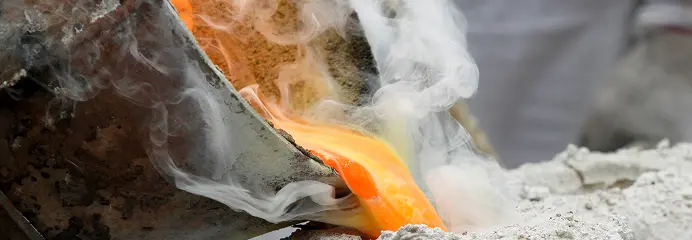
Sand casting is utilized in the manufacturing process to create complex metal parts by pouring molten metal into sand molds. This method is ideal for producing large components and is commonly used for manufacturing parts made from gray and ductile iron, stainless steel, aluminum, and carbon steel.
It's particularly beneficial for industries such as oil and gas, railway, and construction, where the strength and durability of large, intricate parts are crucial.
Investment Casting
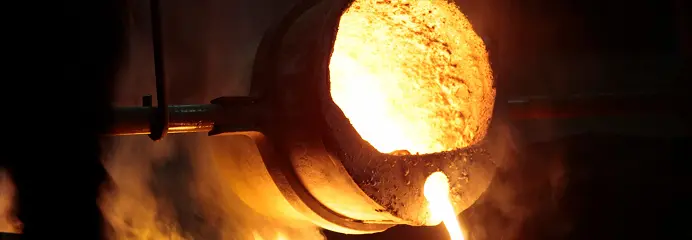
Investment casting, also known as lost-wax casting, is used to produce high-precision components. This process involves creating a wax model of the desired part, which is then coated in a ceramic material to form a mold. Once the wax is melted away, molten metal is poured into the mold to form the part.
This technique is perfect for manufacturing intricate and high-tolerance parts from duplex, stainless, and carbon steel.
Stamping
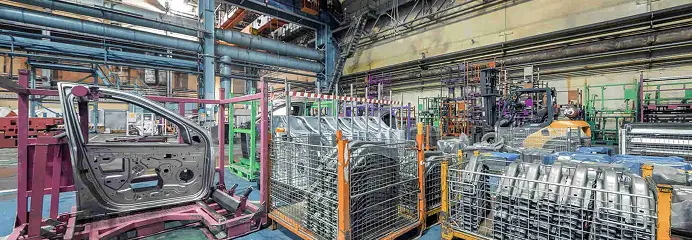
Stamping is a manufacturing process used to shape metal sheets into specific forms using a press and a die. This method is highly efficient for high-volume production.
Stamping ensures that each part is consistent in quality and precision, making it ideal for producing large quantities of parts quickly and cost-effectively.
Precision Machining
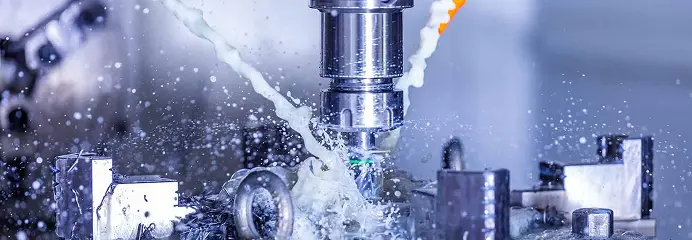
Precision machining involves the use of CNC (Computer Numerical Control) machines to shape metal parts to exact specifications. This process is critical in creating highly accurate components from steel and aluminum for critical sectors.
CNC machining ensures that each piece meets strict quality standards and dimensional accuracy, making it essential for complex and precision-driven projects.
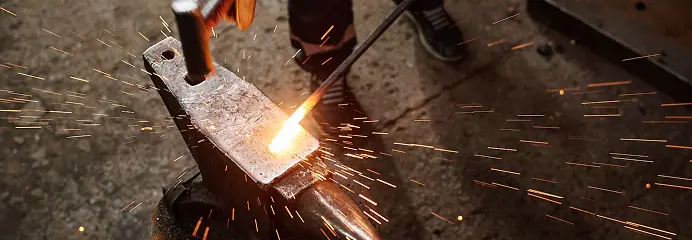
Forging
Forging involves shaping metal using localized compressive forces, often delivered by a hammer or a die. This process is used to manufacture durable components from materials such as steel and aluminum. Forging is particularly suitable for producing parts that require high strength and toughness. The resulting components are often stronger than those produced by other manufacturing methods due to the refined grain structure of the forged metal.
There are two main types of forging: open die, which involves shaping the metal between multiple dies that do not enclose the material entirely, and closed die, where the metal is fully enclosed and shaped within the dies.
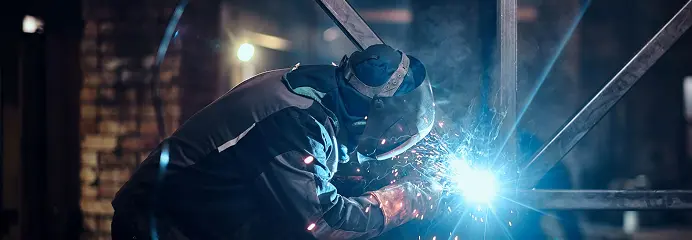
Fabrication
Fabrication encompasses a range of processes, including welding, laser cutting, and bending, to assemble metal parts into final products. This method is used to create custom metal structures and components with high strength and durability, suitable for heavy-duty applications.
Fabrication is essential in industries such as construction, where bespoke metalwork is required to meet specific project needs.
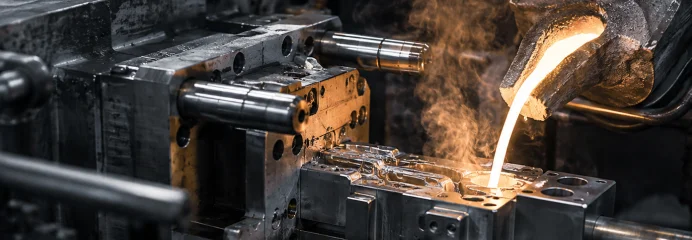
High-Pressure Die Casting
High-pressure die casting involves forcing molten metal, such as aluminum or zinc, into a mold cavity under high pressure. This process is used to produce precision components with intricate designs and tight tolerances.
High-pressure die casting is ideal for manufacturing parts for the oil and gas and railway industries, where strength and detailed accuracy are crucial.
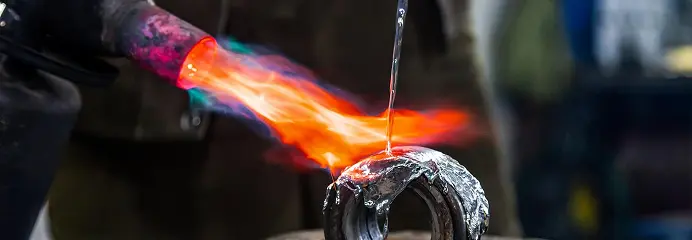
Gravity Casting
Gravity casting uses gravity to fill molds with molten metal, typically aluminum, to create parts. This process is employed to manufacture components that require good strength and detailed features, suitable for the oil and gas, railway, and construction sectors. Gravity casting is a cost-effective method for producing medium to large-sized parts with consistent quality and performance.
Gravity casting is a cost-effective method for producing medium to large-sized parts with consistent quality and performance.

Align Manufacturing, we pride ourselves on our commitment to producing quality metal parts. Our experienced team utilizes equipment and processes to ensure each component meets the highest standards of precision and reliability.
We continuously strive to innovate and improve our methods, ensuring that our clients receive parts that not only meet but exceed their expectations in performance and durability. With a focus on excellence and customer satisfaction, Align MFG remains a trusted partner for all your metal needs.
contact us —
ready
to discuss?

WE'RE A DEDICATED TEAM OF LOCAL PROFESSIONALS PASSIONATELY COMMITTED TO FUELING YOUR PROJECT'S SUCCESS. Our team is dedicated to maintaining a keen eye for detail in every aspect of the process, from design to delivery. Simultaneously, we prioritize clear, consistent communication with you to ensure that your vision and requirements are fully understood and met.