
Forging
Advantages —
Why
Choose
Align MFG?
Expertise Across Borders
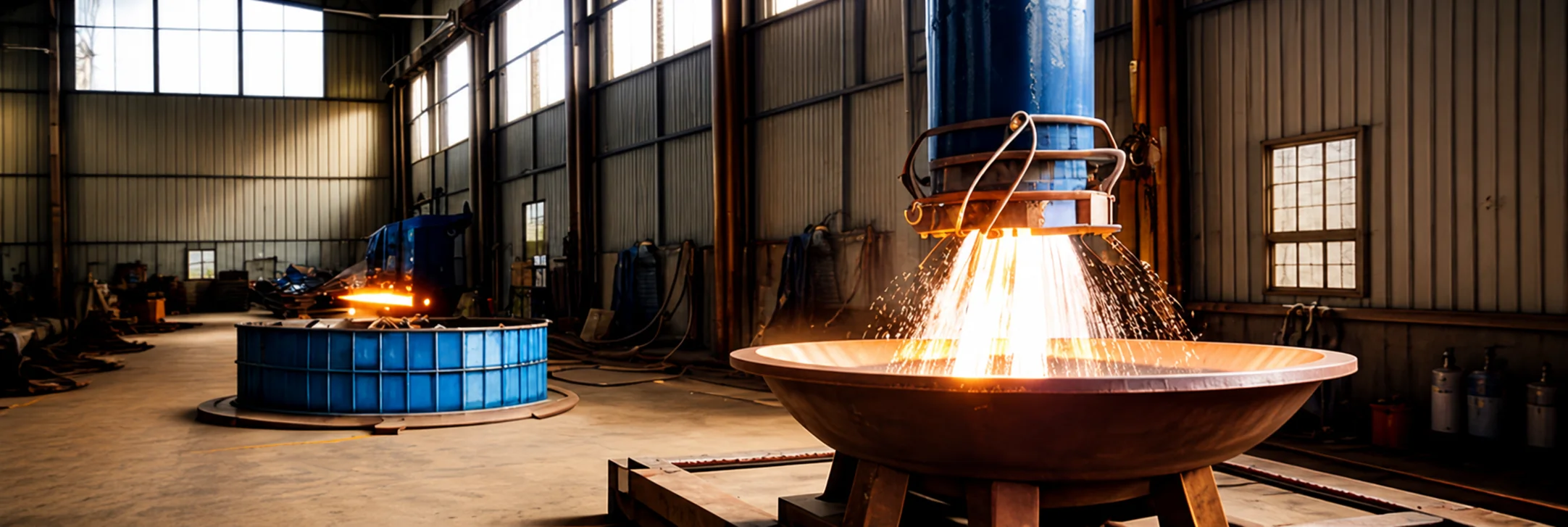
With factories in Thailand, Vietnam, and India, we bring global expertise and local understanding to your projects.
Customization and Flexibility
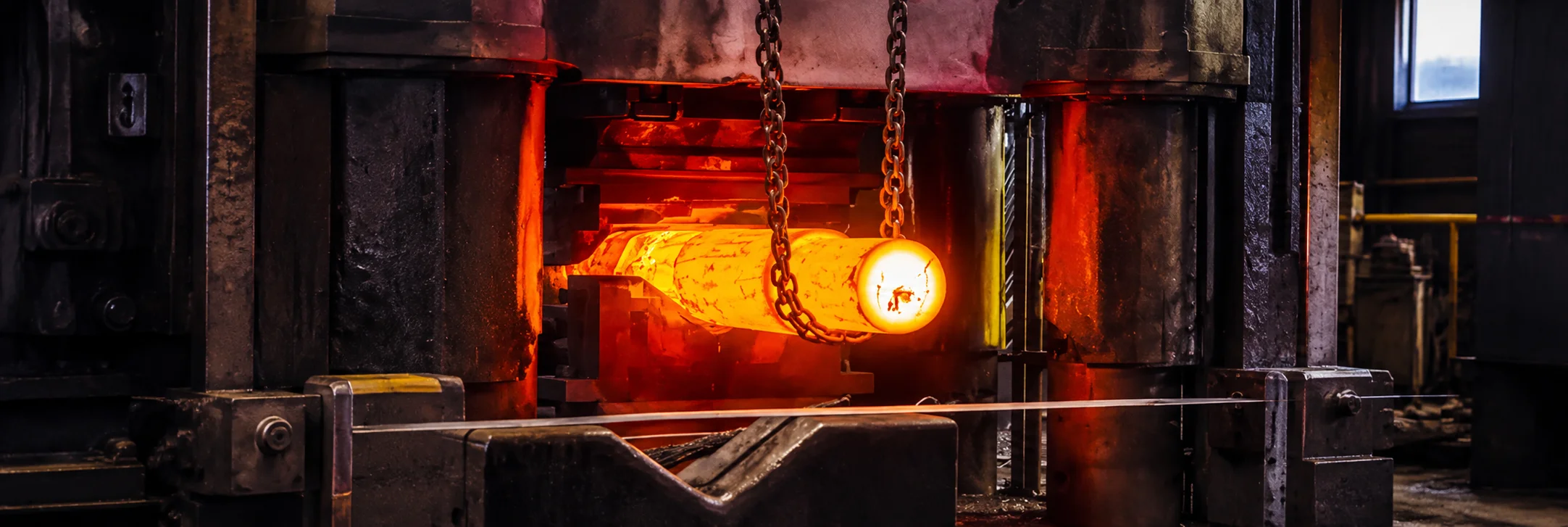
Whether it's a unique prototype or a large-scale production, we tailor our services to meet your needs.
Quality Assurance
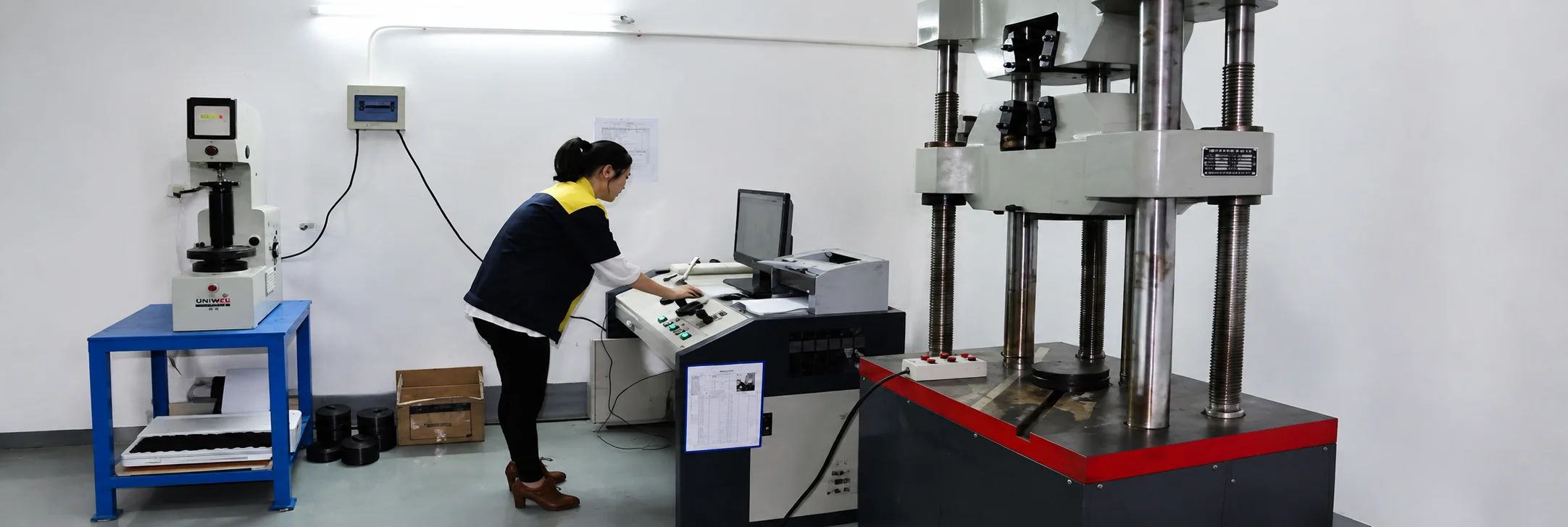
Our commitment to quality and precision ensures that every component we forge stands the test of time and function.
Industrial Expertise
Our depth of knowledge in various industrial applications, from oil and gas to construction and beyond, allows us to provide solutions that are highly relevant and efficient for specific industry needs.
Services —
OUR
Services
Closed Die Forging
Precision and Complexity Made Easy:
Our closed die forging process is the pinnacle of precision and consistency, ideal for high-volume production runs. We transform intricate designs into reality, ensuring tight tolerances and enhanced material integrity.
Open Die Forging
Flexibility and Customization at Its Finest:
For larger components or custom orders, our open die forging offers unmatched flexibility. By improving the metal’s internal grain structure, we ensure your products have superior strength and durability. Our skilled team works closely with you, adapting to the unique demands of your project.
Choose Your Forging Method
Hot or Cold?
Cold Forging for Efficiency:
Opt for our cold forging when you need high-strength, simpler shapes with minimal material waste. It's perfect for high-volume production, offering cost-effective solutions without compromising on quality.
Hot Forging for Complexity:
Our hot forging services are ideal for more complex and elaborate forms. By heating metal above its recrystallization temperature, we enhance its ductility, making it more malleable for intricate designs.
Global Expertise
Western-Owned,
Local Expertise
Each of our facilities is equipped with the appropriate manufacturing technologies and engineering capabilities, ready to fulfill your project needs.
Specializing in large-scale productions, our Thailand facility is the hub for intricate sand casting projects.
Known for its rapid turnaround times, the Vietnam facility excels in both small and large batch productions.
Our India location combines cost-effectiveness with high-quality production, suitable for a wide range of sand casting applications.
Our USA headquarters in Arroyo Grande, California, supervises all international operations, ensuring compliance with American quality standards.
Our Singapore headquarters oversees strategy, quality, and coordination across stamping operations in Thailand, Vietnam, and India.
FAQ
Q: Why is forging ideal for producing exceptionally strong metal parts?
A: Forging involves shaping metal using compressive forces, which realigns and compresses the metal’s internal structure. This process increases density and removes internal voids, resulting in parts that have exceptional strength, durability, and resistance to fatigue, making forging ideal for high-stress applications.
Q: How does forging differ from casting in terms of durability and strength?
A: Forging produces stronger and more durable parts compared to casting because the compressive forces involved in forging refine the metal’s grain structure, enhancing its toughness and resistance to impact. In contrast, casting involves pouring molten metal into a mold, which can result in micro-porosity and weaker grain boundaries, especially under high-stress conditions.
Q: Which materials are most commonly forged, and how do they enhance part resilience?
A:Commonly forged materials include steel, aluminum, titanium, and copper alloys. Steel is widely used for its exceptional strength and durability, aluminum provides a lightweight yet strong option, titanium offers high strength-to-weight ratio and corrosion resistance, and copper alloys are used for their conductivity and malleability. These materials respond well to forging, enhancing resilience in applications requiring durability.
Q: What applications benefit most from forged components, especially in heavy-duty use?
A: Forged components are essential in applications where strength and reliability are critical, such as in automotive, aerospace, construction, and oil and gas industries. Parts like crankshafts, gears, structural beams, and pipeline components benefit from forging’s high strength and toughness, making them suitable for heavy-duty and high-stress environments.
Q: How does forging improve the metal’s grain structure for higher performance?
A: Forging refines the metal’s grain structure by aligning the grains along the shape of the part, enhancing its mechanical properties. This alignment reduces weak points, increases strength, and improves fatigue resistance, which leads to higher performance under stress and extends the component’s lifespan.
contact us —
ready
to discuss?

WE'RE A DEDICATED TEAM OF LOCAL PROFESSIONALS PASSIONATELY COMMITTED TO FUELING YOUR PROJECT'S SUCCESS. Our team is dedicated to maintaining a keen eye for detail in every aspect of the process, from design to delivery. Simultaneously, we prioritize clear, consistent communication with you to ensure that your vision and requirements are fully understood and met.